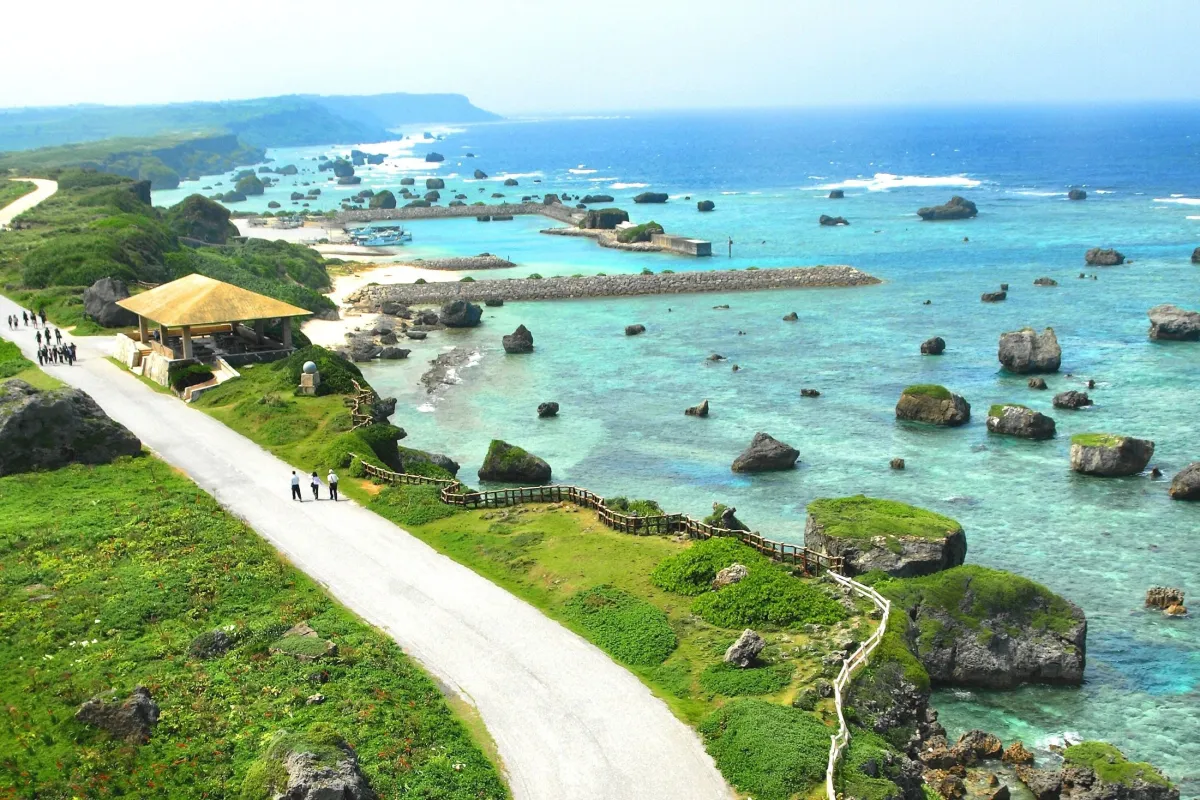
The Blue Zones
The concept of the Blue Zones refers to geographical regions in which people live significantly longer than the global average. The term was first presented to a wide public by Dan Buettner, an American explorer and author, in a cover story of the magazine National Geographic in 2005; it goes back to earlier demographic work on Sardinia by Gianni Pes and Michel Poulain, who marked the villages with the highest concentration of centenarians in blue ink on a map. Buettner identified five main regions regarded as Blue Zones: Okinawa (Japan), Sardinia (Italy), the Nicoya peninsula (Costa Rica), Ikaria (Greece) and the community of Seventh-day Adventists in Loma Linda, California. These regions are characterised not only by a high number of centenarians but also by a notable quality of life in old age and a lower incidence of chronic conditions in the demographic statistics.
Shared characteristics of the Blue Zones
The inhabitants of these Blue Zones share a number of lifestyle characteristics that Buettner and his collaborators regard as contributing to their longevity. These characteristics can be grouped into six main categories:
- Family orientation: in the Blue Zones, the family has a high status. People spend a great deal of time with their relatives and look after each other, which results in a strong social network. These family ties are associated with emotional wellbeing and with mental health in the research literature.
- No smoking: in most Blue Zones, smoking is rare or actively avoided. Smoking is one of the best-documented risk factors for chronic conditions such as cardiovascular disease and cancer, so its absence is one of the clearest explanations for the health statistics of these regions.
- Plant-based diet: the diet in the Blue Zones is predominantly plant-based. People consume large amounts of vegetables, fruit, legumes and whole grains. Meat is eaten rarely, and when it is, in small amounts. This dietary pattern is rich in fibre and in plant compounds and is associated with lower rates of age-related conditions in epidemiological studies.
- Moderate physical activity: physical activity is an integral part of life in the Blue Zones. People are active throughout the day, whether through gardening, walking or other everyday tasks. This natural movement, rather than structured exercise, is characteristic of all five regions.
- Social engagement: people in the Blue Zones are socially active and involved in their communities. They have strong social networks and regularly take part in community activities, which is associated with a feeling of belonging and with lower stress in the research literature.
- Legumes as a staple food: legumes such as beans, lentils and peas are an essential part of the diet in the Blue Zones. They are rich in fibre, protein and micronutrients and are a staple in all five regions, from black beans in Nicoya to fava beans in Sardinia and soy in Okinawa.
Further lifestyle characteristics
In addition to these six main characteristics, Buettner identified nine lessons from the lives of people in the Blue Zones, which he called the Power 9:
- Natural movement: regular movement as part of daily life rather than as a separate activity.
- Purpose: having a sense of purpose in life, whether through family, work or hobbies. In Okinawa this is called ikigai, in Nicoya plan de vida.
- Downshifting: routines for coping with stress, such as prayer, naps, happy hour or ancestor remembrance, are widespread.
- The 80 percent rule: people tend to stop eating when they are about 80 percent full, a practice known in Okinawa as hara hachi bu.
- Plant slant: a diet in which legumes are the cornerstone and meat is eaten only a few times a month.
- Moderate alcohol: in many Blue Zones, wine is consumed in moderation, usually with food and in company; the Adventists of Loma Linda are the exception and drink no alcohol.
- Belonging: many inhabitants regularly practise their religion or spirituality, which gives them support and community.
- Loved ones first: the care of family relationships has priority; ageing parents and grandparents often live nearby or in the same household.
- Right tribe: people are part of social circles that share healthy behaviours.
Scientific assessment
Research on the Blue Zones has found support in the scientific literature in several respects. Studies show that social ties are associated with lower stress markers and with lower rates of heart disease. Epidemiological studies document the association between a largely plant-based diet and lower rates of chronic conditions such as type 2 diabetes and certain cancers. The lifestyle pattern described for the Blue Zones therefore overlaps with the factors that public health research identifies independently.
The concept has also been criticised. Demographers have pointed out that in some regions birth records are incomplete and that the number of centenarians may be overstated by age misreporting. Critics also note that the Blue Zones concept has been commercialised and that the lifestyle characteristics were selected after the fact rather than tested in controlled studies. The observational nature of the data means that no single factor can be shown to cause the longevity observed.
Practical applications
Knowledge of the lifestyle characteristics of the Blue Zones has found practical applications. Cities have developed programmes to establish community gardens or to encourage neighbourhood initiatives that strengthen social interaction. Schools have introduced nutrition education programmes to familiarise children with eating habits based on vegetables and legumes. In the United States, several towns have taken part in Blue Zones Project initiatives that change the built environment to make walking and social contact easier.
Summary
The concept of the Blue Zones offers insight into the factors associated with a long life in the regions where unusually many people reach a high age. The combination of a largely plant-based diet, regular natural movement, strong social ties and a sense of purpose emerges as the common pattern of these regions. Whether adopting some of these principles, whether through diet or through more social interaction, has the same association with longevity elsewhere is a question for further research.
In a world full of stress factors, the lessons from the Blue Zones offer an encouraging perspective on ageing. They describe how people in these regions live, and they overlap with what public health research has found; they are an observation, not a guarantee.