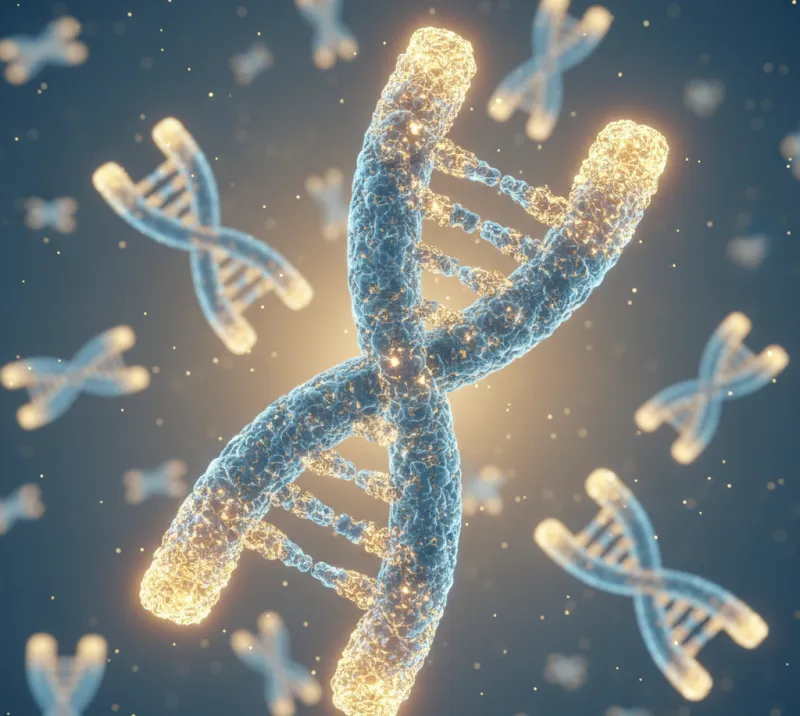
Ageing research has made remarkable progress in recent years, with the potential to transform our understanding of ageing and the questions surrounding lifespan and quality of life in old age. These developments are the result of intensive research in various fields, including genetics, cell biology, molecular biology and regenerative medicine. In this article, we look at some of the most promising research directions in ageing research, which are investigating whether the ageing process or its consequences can be influenced.
1. Senolytic approaches
A significant development in ageing research is the investigation of senolytic substances. Senescent cells are cells that no longer function properly and can no longer divide. They accumulate in the body with increasing age and are associated with inflammation and age-related diseases. Researchers are investigating whether the targeted removal of these senescent cells with so-called senolytics influences ageing processes.Studies in mice have shown that removing senescent cells was associated not only with a longer lifespan but also with fewer age-related conditions such as osteoporosis and heart disease in the animals. One example of a company active in this field is UNITY Biotechnology, which has raised over 100 million dollars in funding to conduct clinical trials of senolytic drugs in humans.
2. Telomerase activation
Telomeres are the protective caps at the ends of chromosomes that get shorter with every cell division. When they reach a critical length, this leads to cell senescence or apoptosis (programmed cell death). Activating the enzyme telomerase could theoretically lengthen telomeres and thus slow down the ageing process at cellular level.Research has shown that animals in which telomerase was activated showed better health parameters and a longer lifespan. Nobel laureate Elizabeth Blackburn worked with other scientists on telomerase research and highlighted its potential significance for ageing research. The challenge, however, is to ensure that overactivation of telomerase does not lead to uncontrolled cell growth or cancer.
3. Gene editing technologies
The development of gene editing technologies such as CRISPR/Cas9 has opened up new ways of directly influencing genetic factors of ageing. With these technologies, researchers can specifically modify or repair genes associated with the ageing process. Studies have shown that certain genetic mutations can be corrected with CRISPR, which is being researched in connection with age-related diseases such as Alzheimer's or heart disease.The use of gene editing to extend lifespan is still in its infancy, but initial results show interesting approaches for research into age-related diseases at the genetic level.
4. Epigenetic modifications
Another promising approach in ageing research is the study of epigenetic modifications – changes in gene expression without changes in the DNA sequence itself. Epigenetic changes can be influenced by environmental factors such as diet and stress and play a key role in the ageing process.Researchers have found that certain epigenetic changes correlate with ageing and may be reversible. The development of drugs or methods for the targeted modification of epigenetic markers could represent a new strategy in ageing research.
5. Regenerative medicine
Regenerative medicine aims to regenerate damaged tissues and organs using stem cell technologies or tissue engineering. Advances in this field could make it possible to repair age-related damage to organs such as the heart or liver.Companies such as Calico Life Sciences are working on innovative approaches to cell rejuvenation and regenerative methods. The combination of stem cell technology and advanced biomaterials could one day make it possible to successfully regenerate damaged organs.
6. Lifestyle interventions
Alongside biomedical advances, lifestyle also plays a key role in the ageing process. Studies repeatedly show that a healthy diet, regular exercise and stress management are associated with health in old age. Interventions promoting a healthy lifestyle can therefore be seen as complementary to biomedical research.Initiatives to educate people about healthy lifestyles and programmes promoting physical activity are being studied in connection with age-related diseases and quality of life in older people.
Conclusion
Advances in ageing research are promising and could fundamentally change our understanding of ageing. From senolytic approaches and gene editing to regenerative medicine – the possibilities are diverse and exciting. Many of these technologies are still in the research phase.It remains to be seen how quickly these developments can be translated into clinical applications. Nevertheless, the future of ageing research holds great opportunities. By combining biomedical and lifestyle-related approaches, research could take a significant step towards a better understanding of an active and fulfilling life in old age.Overall, there is a clear trend: the scientific community is striving to better understand the mechanisms of ageing and to develop innovative solutions. As research progresses, we may one day…