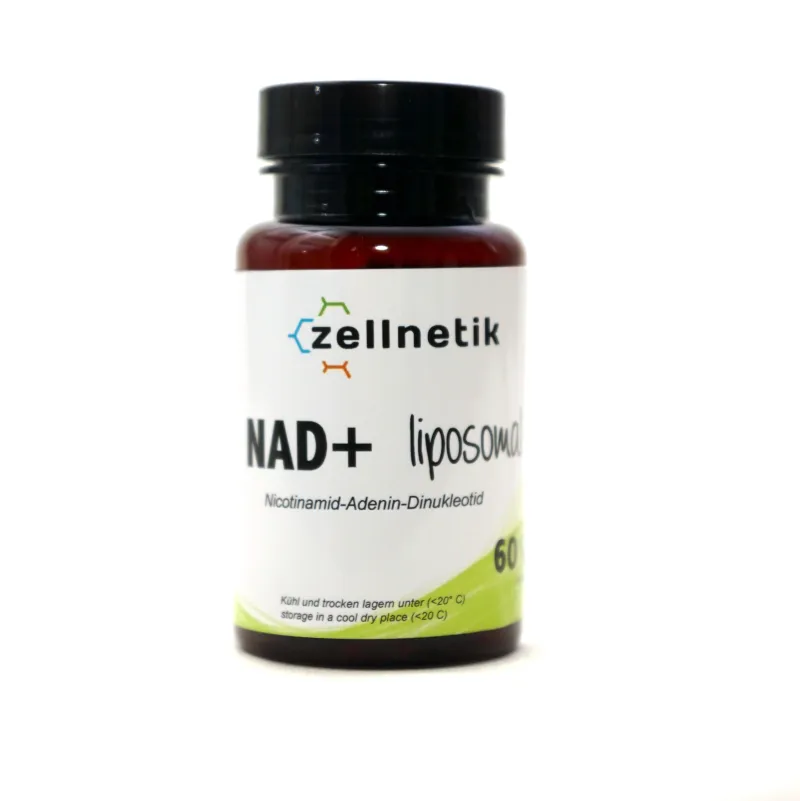
NAD+: a central coenzyme of the cell
In cell biology and ageing research, one molecule has received particular attention in recent years: NAD+. This inconspicuous but essential coenzyme plays a central role in numerous cellular processes and is one of the most frequently studied molecules in the biology of ageing. What exactly is NAD+, and why does it matter?
What is NAD+?
NAD+ stands for nicotinamide adenine dinucleotide and is a coenzyme that occurs in all living cells. It is essential for energy metabolism and plays an important role in the regulation of various cellular processes. NAD+ exists in two forms: the oxidised form (NAD+) and the reduced form (NADH). The two forms are constantly converted into each other during metabolism.
The functions of NAD+ in the body
Energy production. One of the main functions of NAD+ is its role in energy production. It is an indispensable component of glycolysis and the citric acid cycle, two central processes of energy metabolism. NAD+ accepts electrons from the breakdown of nutrients and delivers them to the respiratory chain, where ATP, the universal energy currency of the cell, is produced.
DNA repair. NAD+ is also involved in the repair of DNA damage. It serves as a substrate for enzymes such as PARP (poly-ADP-ribose polymerase), which play an important role in the recognition and repair of DNA damage. Each repair event consumes NAD+.
Gene regulation. Sirtuins, a group of proteins often referred to as longevity genes in the popular literature, require NAD+ for their function. These proteins regulate various cellular processes, including gene expression, metabolism and the cellular response to stress. In model organisms such as yeast, worms and mice, sirtuin activity has been linked to lifespan in a number of studies.
NAD+ and ageing
With increasing age, NAD+ levels in the body decline. This has been measured in animal tissues and in human skin, muscle and blood samples. The decline has been discussed in connection with various age-related conditions and with the general ageing process. Researchers hypothesise that maintaining NAD+ levels could play a role in the ageing process; this hypothesis is the subject of current studies in cell, animal and early human models and has not been confirmed in humans.
How the body produces NAD+
The body can produce NAD+ in several ways:
- De novo synthesis: from the amino acid tryptophan
- Salvage pathway: from vitamin B3 precursors such as nicotinamide, nicotinamide riboside and nicotinamide mononucleotide
- Preiss-Handler pathway: from nicotinic acid
Foods rich in NAD+ precursors include:
- Yeast
- Dairy products
- Fish
- Green leafy vegetables
- Legumes
Research areas
Cognitive function. Studies in animal models have examined the role of NAD+ in the maintenance of cognitive function. Researchers are investigating its involvement in neuroplasticity and in neurodegenerative disease models; the data come from cells and animals.
Heart. NAD+ is required for the function of heart muscle cells. In animal models, researchers have examined whether NAD+ availability influences the response of heart tissue to oxidative stress and to age-related changes.
Metabolic regulation. Because of its role in energy metabolism, NAD+ is a variable in studies on blood glucose regulation and insulin sensitivity, mostly in rodents and in a few small human trials.
Muscle. NAD+ is required for energy production in muscle cells. Studies in older mice and small human trials have measured muscle parameters as outcomes of NAD+ precursor intake.
NAD+ precursors
Because of the research interest described above, several ways of raising NAD+ levels are being studied:
NMN (nicotinamide mononucleotide). NMN is a direct precursor of NAD+ in the salvage pathway and is used in studies to examine NAD+ synthesis.
NR (nicotinamide riboside). NR is another form of vitamin B3 that is converted into NAD+ via NMN. It has been examined in several human trials in which blood NAD+ levels were measured.
Niacin and niacinamide. These traditional forms of vitamin B3 also contribute to NAD+ production. Niacin in high doses is known to cause flushing, which is one reason researchers have turned to the newer precursors NMN and NR.
Current research and future perspectives
Research on NAD+ is an active and rapidly developing field. Current studies concentrate on:
- The role of NAD+ in specific age-related conditions
- Methods for raising NAD+ levels and their comparison
- Long-term effects of NAD+ precursor intake
- Possible clinical applications under investigation
NAD+ and lifestyle
Apart from precursors, lifestyle factors are being studied for their influence on NAD+ levels:
Exercise. In animal and human studies, regular physical activity was associated with higher NAMPT expression, the rate-limiting enzyme of the salvage pathway, and with higher sirtuin activity in muscle.
Diet. A balanced diet containing NAD+ precursors is the usual route through which the body obtains the raw material for NAD+ synthesis.
Stress. In animal models, chronic stress was associated with lower NAD+ levels. Whether stress-reducing practices such as meditation have an indirect effect on NAD+ in humans has not been examined in controlled studies.
Safety and side effects
NAD+ precursors have been tolerated in the human trials conducted so far, which were short. The long-term effects of their intake have not yet been fully researched. Side effects reported in trials include nausea, headache and fatigue.
NAD+ in different stages of life
Youth and early adulthood. In this phase, NAD+ levels are naturally high.
Middle age. Measurements indicate that NAD+ levels begin to decline in this phase; the rate differs between tissues and individuals.
Older age. Most studies on NAD+ precursors in humans have been conducted in older participants, because this is where the measured decline is largest.
Summary
NAD+ is a molecule with far-reaching involvement in cellular metabolism and in the ageing process. While research shows a consistent age-related decline, further studies are required to understand the consequences of this decline and to determine whether raising NAD+ levels has any relevance in humans. The maintenance of NAD+ levels through lifestyle and possibly through precursors is a hypothesis under investigation, not an established intervention. Anyone considering NAD+ precursors should discuss this with a physician.
The future of NAD+ research promises to be exciting and could open up new ways of understanding the ageing process and age-related conditions.